A roll-off open-top container is a self-loaded disposal system brought by a specialized hoist truck, distinct from full-service junk removal where a crew loads by hand over an hourly rate. For contractors stripping…
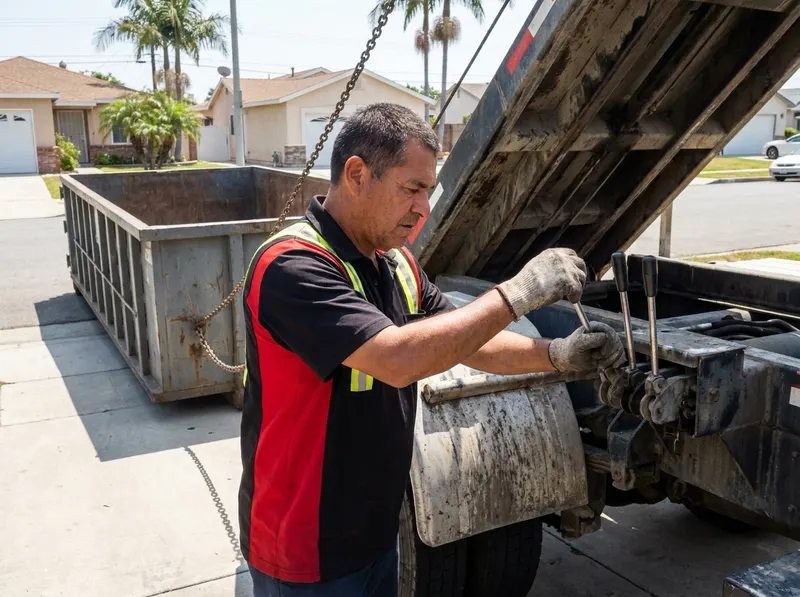
A roll-off open-top container is a self-loaded disposal system brought by a specialized hoist truck, distinct from full-service junk removal where a crew loads by hand over an hourly rate. For contractors stripping drywall in Sherman Oaks or homeowners clearing multi-generation estates in Highland Park, a roll-off provides an uninterrupted disposal reservoir on site. When staging demolition debris along narrow hillside corridors in Silver Lake or Echo Park, placing the container entirely within private property lines avoids the Los Angeles Bureau of Street Services street-use permit, which requires explicit clearance and safety markers whenever a container occupies public roadway lanes. Driveway placements require a 10-foot lateral clearance and 14 feet of vertical clearance beneath low-hanging electrical drops, tree canopies, or building overhangs.
Selecting container volume depends directly on the density of the discarded material. Heavy inert materials such as broken foundation concrete, brick from chimney retrofits in Boyle Heights, or wet soil require low-profile 10-yard inert boxes, because state highway axle limits cap road-legal payload before volume capacity is reached. Standard remodeling jobs involving lath, plaster, cabinets, and framing lumber in Koreatown or Brentwood fit cleanly into 20-yard or 30-yard configurations without exceeding typical 2-ton to 4-ton road thresholds. The trade-off between container sizes centers on footprint versus vertical load clearance: a 10-yard container leaves space for resident vehicles in a single-car driveway, whereas a 40-yard industrial bin demands roughly 22 feet of straight driveway length and open street access for the roll-off rails to pivot safely.
Managing open-top loads requires strict adherence to level-load standards under California highway safety regulations. Debris cannot extend above the rigid steel rim of the container, as haulers must deploy mechanical mesh tarps across the cargo box before moving onto major corridors like the 101 or Interstate 5. In tight residential alleys in Venice or port-adjacent access points in San Pedro, drivers evaluate turning radii to verify the hoist can tilt back smoothly without catching overhead utilities. Exceeding contracted tonnage allowances triggers baseline per-ton surcharge rates billed at regional transfer stations, so sorting light dimensional wood from dense tile beds prevents unexpected overage assessments.
Every job gets a firm, written price after a free on-site visit.
Tell us about your roll-off open-top dumpster rental job in Los Angeles and we'll send a clear, written quote, usually the same day.
 United Dumpster Rental