Permanent waste handling requires strict operational planning to prevent alley blockages, neighbor disputes, and municipal citations. Commercial front-load dumpsters serve steady-generation sites such as grocery stores…
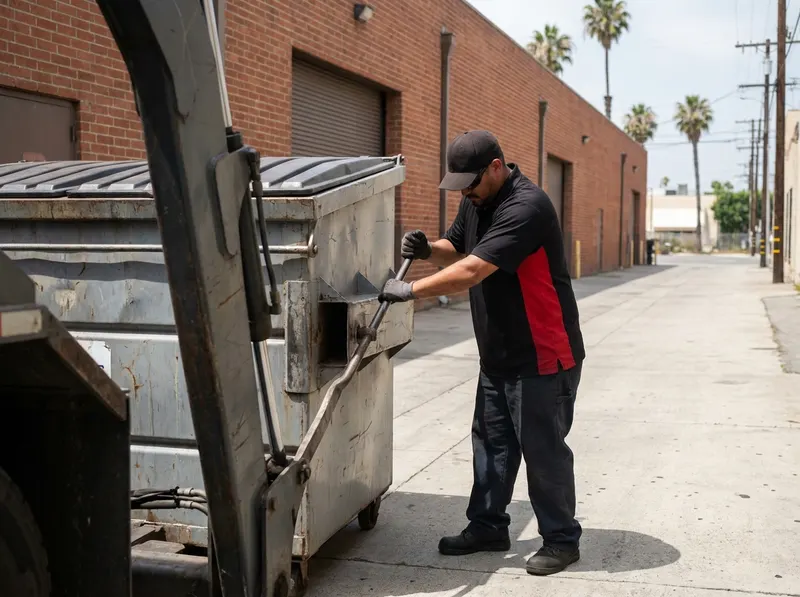
Permanent waste handling requires strict operational planning to prevent alley blockages, neighbor disputes, and municipal citations. Commercial front-load dumpsters serve steady-generation sites such as grocery stores in Boyle Heights, strip retail centers along Olympic Boulevard in Koreatown, and dense multi-family residential complexes across Silver Lake and Echo Park. Selecting a 2-yard container works well for small retail storefronts generating under 15 trash bags per week, while an 8-yard container supports high-turnover restaurants and large multi-unit apartment complexes in Brentwood and Sherman Oaks. A commercial front-load dumpster is a permanent, route-serviced container emptied into an overhead-fork truck, which is distinctly different from temporary roll-off open-top containers intended for one-off renovation debris. Choosing higher-capacity containers over frequent tipping cycles reduces traffic disruption in narrow alleyways, though larger bins require dedicated enclosure space measuring at least 10 feet wide by 10 feet deep.
Site access across Los Angeles neighborhoods dictates container dimensions, casters, and placement methods. Properties situated on steep terrain in Highland Park or tight beach-adjacent commercial corridors in Venice frequently require 2-yard or 3-yard bins mounted on heavy-duty swivel casters, allowing grounds personnel to wheel the bin out to street curbs when alley overhead clearance sits below the 14-foot truck threshold. Facilities near the Port of Los Angeles in San Pedro managing high organic volumes or wet refuse require containers fitted with drain plugs and gasketed plastic lids to deter scavengers and stay compliant with local sanitation codes. If waste containers sit inside private enclosures, automated truck forks require an approach clearance of 50 straight feet and 14 vertical feet; if bins are placed on public rights-of-way, property owners must secure authorization from the Los Angeles Bureau of Street Services to avoid non-compliance fines.
Setting up regular service follows a clean three-step operational sequence: First, dispatch reviews property aerials or visits the location to measure enclosure gate widths, overhead wire heights, and turning radii. Second, dispatch assigns the correct container footprint, arranges gravity locks to prevent illegal neighborhood dumping, and drops the bin into place. Third, front-loader trucks service the bin on scheduled routes between 6:00 AM and 6:00 PM, logging arrival timestamps and container fill volumes.
Every job gets a firm, written price after a free on-site visit.
Tell us about your commercial front-load dumpster service job in Los Angeles and we'll send a clear, written quote, usually the same day.
 United Dumpster Rental